
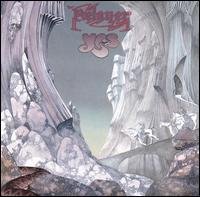
In the aftermath of my original review of
Todd Rundgren’s Utopia a few months ago and the polite
outcry that lef me to re-review the album, one correspondent in the
alt.music.todd-rundgren newsgroup, Loznik, challenged me to give
Yes’s 1974 release
Relayer another listen, especially after I had admitted it
had been some time since I had listened to the album.
Now, some of the more hardcore progressive rock zealots (yeah,
you know who you are) are saying, “Oh, God, he’s gonna rip Yes
again.” No, not completely. While there were portions of
Relayer I didn’t like, the album, for the most part, is
quite listenable.
No matter what side of the fence you sit on, the one fact that
is indisputable is that Yes was going through a transition period,
especially after the bloated monstrosity that was
Tales From Topographic Oceans. Gone was keyboardist Rick
Wakeman, who apparently had enough and scooted out the door. (He
would return in 1977 for two albums before departing again.) In was
Patrick Moraz, who seemed to be trying to figure out how to make
the keyboard sound his own on
Relayer. Let’s face it, he had pretty big shoes to fill —
the fact he lasted all of one album isn’t a declaration against the
job he did on this one, however.
Gone also — well, sort of — were the side-long cosmic
jerk-offs that made
Tales From Topographic Oceans so unbearable (at least to
this critic). Granted, “The Gates Of Delirium” takes up the whole
first side of
Relayer; fact is, this is a much more listenable piece —
especially because Yes decided to finally challenge the listener
with touches of jazz thrown in the mix. Oh, sure, I could have
argued for lopping off two minutes or so of the instrumental work,
but even with it on this cut, it still is a decent effort.
Especially deserving of praise is guitarist Steve Howe’s work,
which is the most jazzy and fluid I think I’ve ever heard him
play.
Also worth noting on “The Gates Of Delirium” is the premiere of
Jon Anderson’s vocal lines at the end — the lines that would
become “Soon” later in Yes’s career. (An example of “Soon” can be
found on
9012Live – The Solos.)
This, however, doesn’t excuse the sonic noise that Howe twists
out of his guitar during “Sound Chaser.” The bulk of this track
sounds like it was a lot of improvisational work — and for a long
time, I found myself asking, “Where the hell is this track going?”
“Sound Chaser” eventually does find its niche — I think you can
hear the beginnings of the track “Going For The One” in Howe’s
slide work — but it takes far too long to become a track with some
meat behind it.
This brings us to the third and final track on
Relayer — “To Be Over,” a song that brought this version of
Yes together the best. Moraz’s keyboard work shines the brightest
on this song, while the whole band seems to be firing on all
cylinders, making this track seem far shorter than nine minutes.
This is truly progressive rock without overkill — a solid,
beautiful number.
So why isn’t
Relayer better known? Good question — maybe Loznik can
answer it if he’s reading and wishes to enlighten me. Admittedly,
this album came out in the shadows of
Tales From Topographic Oceans, and had I been actively
buying records in the fall of 1974 (I was three years old, for
Crissakes, gimme a break), I might have been a little gun-shy about
trying the disc out. Also, with Wakeman gone, some might have
questioned how good of a replacement Moraz would be — never mind
the fact that Wakeman wasn’t the original keyboardist for Yes.
Excuses aside,
Relayer has enough material to challenge, delight, and even
frustrate today’s progressive rock fan, and it is a far better
album than history has made it out to be.
User Rating: B+ (1 reader)








yea! this album TOTALLY is as good as fragile!
and i know its typical to rip on a keyboardist that was trying to fill wakemens shoes but your comment that moraz was trying to make the keyboard sound like his own… was absolutely moronic since its not like yes just picked this guy off the street. moraz is a jazz keyboardist and wakemen is a classical keyboardist… obviously the sound is going to be drastically different
Why do I even bother with you, when you obviously didn’t read the goddamn review?
First off, I don’t listen to an album and say, “Yeah, that’s equal to how I felt when I listened to [insert album name here]”. I try to take each one on its own merit. The fact that “Relayer” and “Fragile” got the same rating is opinion – nothing more, nothing less.
And show me where I ripped Moraz as a keyboardist. Christ, they could have had Herbie Hancock come in for this album, and he would still have needed a “fleshing out” period. That’s not a knock against Hancock, Moraz or Wakeman – the fact is, Moraz was coming in after three albums featuring Wakeman’s signature sound. He certainly wasn’t going to want to mimic it, but he was going to need some time to develop his own signature on the music. I think he did an admirable job on this disc, and with no disrespect against Wakeman, wish Moraz would have lasted more than one disc just to see where he would have taken the Yes keyboard sound.