Kylie Minogue is something of an enigma. Not because she has worked to cultivate a mysterious image. But the Australian pop diva has managed to create a seemingly paradoxical career: she is one of the biggest pop stars on the planet, selling over 80 million albums, and yet remains largely niche in arguably the biggest single market: the USA. Aside from her American queer audience, Kylie Minogue’s American career has been reduced to two hits: “Locomotion” and “Can’t Get You Out Of My Head.”
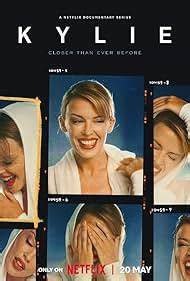 Of course, that changed in the summer of 2023 when the singer scored a viral hit with “Padam Padam” which brought her a renewed audience statewide that she hadn’t enjoyed in over a decade. But in the UK and native Australia, Minogue is a legend and icon, rivalling Madonna. Her shiny pop image would seem somewhat incongruous as a subject for a three-part documentary, but Michael Harte has perfected the art of the celebrity documentary with this film. He manages to tell Minogue’s interesting life story, but pulls back and contextualises it in 20th and 21st century pop culture. Minogue’s narrative isn’t just a pretty pop star with a peppy voice. Harte’s handling of Minogue’s life makes her story one of resilience, joy, and adversity. He also makes the case for regarding pop as estimable and important. Through interviews with various people from Minogue’s life and career, Harte explores how his subject has become emblematic of pop celebrity in the late 20th and 21st century.
The three episodes move largely in chronological order from Minogue’s early days in the 1980s in Australia as a teen star on a long-running soap, Neighbours, before recording her debut single, a cover of Little Eva’s ’60s novelty tune “The Locomotion” that becomes a huge hit, which ushers in Minogue’s recording career. Her debut album, 1988’s Kylie goes on to sell over five million copies, sparking a pop career that includes a string of number one hits, sold-out tours, film and TV work, and icon status.
Simultaneously, we see Minogue, now in her 50s, wiser and with a lot of hindsight, commenting on her past.
One thing that emerges very quickly from the series is that it was very easy to underestimate Minogue’s talents and gifts. Like many dance-pop performers, Minogue was seen as a producer’s product. Her early work was produced by the team of Stock Aitken Waterman (SAW), a trio of English producers who essentially cribbed Berry Gordy’s strategy of the 1960s and created an assembly line of pop music. Stock Atiken Waterman—Mike Stock, Matt Aitken, Pete Waterman—oversaw the production of their music with a Svengali’s heavy-handed approach: they knew what worked and found huge success churning out hits for Minogue and other artists in the decade like Mel and Kim, Rick Astley, Hazell Dean, Bananarama, and Minogue’s former co-star and boyfriend, Jason Donovan.
Minogue was one of the biggest hitmakers for SAW but had to endure accusations of being a puppet. Her slight chirp gave her the unfortunate sobriquet of “the singing budgie” by a mean press. By her third album, Minogue was looking to grow as an artist and was chafing underneath the creatively oppressive factory, and by the early 1990s, the relationship between Minogue and SAW petered out. Pete Waterman is on hand in the documentary to narrate some of their relationship and he characterises the split as amicable and inevitable, but he does come off as somewhat dismissive of Minogue, like a bemused father figure. (His attitude becomes more condescending as the film tackles Minogue’s reinvention in the mid-1990s that was more sexual.)
Harte is particularly interested in how people continually underestimated Minogue but he also is interested in exploring the misogyny that coloured the criticism and press surrounding Minogue during her difficult transition periods of career reinvention. When she looked to incorporate sexuality and sensuality into her image, men, clutching their pearls, would sneer that she was “raunchy.” Like most very young female pop stars, Minogue was obligated to sit on chat show coaches and field inane questions about her sexuality, her body, and the men in her life. Instead of taking her seriously as a performer, she had to dodge snide remarks about her gifts.
Much of the second episode deals with Minogue’s career changes as she started dating INXS frontman Michael Hutchence. It’s during this period that Minogue was releasing some of the most interesting music of her career. Minogue is the first to admit that she wasn’t scoring any hits—she admits that she was making no money for her label—but she started exploring different kinds of popular music, including house and alt-dance. She was also writing her own songs. These seemed like very exciting years for Minogue as an artist and Harte captures the singer’s feeling of flux as she exorcised her SAW past. During this time, she also was in a big romance with Hutchence which she describes as a great love.
One of the most significant contributors to the series is Nick Cave. The two crossed paths when Minogue guested on his 1996 album, Murder Ballads on the duet “Where The Wild Roses Grow.” Though Cave was a leading figure in experimental alt-rock and gothic rock, he found a strange kinship with Minogue and the two forged a close friendship that felt integral to her growth as an artist. Cave more than most, is an astute critic of culture and does some excellent pop culture criticism, highlighting pop’s capacity for joy. “The great beauty of pop music,” he says, “is that it is a joy machine.”
Cave’s input in Kylie is probably the most profound of the interviewees. Harte is smart to have included him because Cave intelligently lays out the thesis for Minogue’s career in a way that is far more interesting and profound than Pete Waterman or Jason Donovan’s grasping attempts.
The other important part of Minogue’s legend is her queer fanbase. Like other queer icons, her career has been sustained through all of its peaks and valleys by her queer fans, who exhibited a kinship for the over-the-top and campy pop diva. When asked by a journalist about the source of this mutual admiration, she finds a poignant link and a shared persecution, pointing out, “There was a time in the beginning of my career when I was having this tirade of nastiness just for being myself. And I think my gay audience may have related to that.” She later declares, “I feel like I could go to war with my gay audience.”
Minogue herself is probably the most engaging that she’s ever been. When Harte points the camera at his subject, he gets a frank, witty woman who eyes her past with a wariness. Despite her glossy pop sheen, Minogue displays flecks of grit; this is especially prominent when she discusses her two bouts with breast cancer. She’s bracing in her candour as she admits to fear and thoughts of mortality and suggesting there were moments when she considered leaving the industry. Harte gratefully avoids pat inspirational pornography, instead letting Minogue’s honest thoughts lead the narrative. When Minogue was first diagnosed in 2005, she had to contend with a colossal media response to her illness; in 2021, the cancer returned and she chose to keep the experience a secret as she was enjoying an umpteenth career rejuvenation because of “Padam Padam.”
In 2023, Minogue release what is arguably one of her greatest works, Tension. One of the songs on the album, “Story,” is a breathtaking sugar rush of a synth-pop song that was written in response to her experience with cancer. “I had a secret that I kept to myself,” she sings in the song’s opening lyric, later singing “Everything is fun until the walls come closing…. I didn’t let the world know I was fighting a big fight, fighting a dark light, raging hard on the inside.” At the time of the album’s release, she chose not to disclose her health with the media, allowing her music to speak for itself.
One of the most beguiling part of Hart’s handling of Minogue’s participation is his capturing Minogue as a creative. He has her flipping through notebooks of song lyrics which she recites, tagging these songs with important milestones in her journey. In the show’s final sequence, Minogue is seen working with her songwriters and producers at a home studio. It’s in this scene that she reveals her second bout of cancer and attributes “Story” to that experience. In a disarmingly sweet moment, she and her bandmates perform a low-fi version of the song, Minogue charmingly out of tune.
Harte ends the film on Minogue’s terms, letting her share her wisdom. “Pop music nurtures me,” she says. “Pop can elate you if you’re feeling depressed. It can soothe you. It can be a type of salvation for some people.”