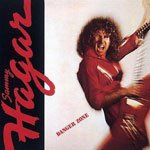
After four years and four inconsistent studio albums (bolstered by one strong live collection), Sammy Hagar and Capitol Records—the label that had signed him as a solo artist after his 1975 exit from Montrose—were deep into a rough patch. Hagar’s 1979 album Steet Machine suggested that he had diagnosed the main flaw in his previous studio efforts—lack of focus—and was working to address it, but he remained frustrated with a perceived lack of label support.
The results of his next studio outing tell a story all by themselves: 1980’s Danger Zone peaked at #85, Hagar and Capitol parted ways, and the ambitious singer-songwriter-guitarist moved over to upstart Geffen Records. As for why Danger Zone stiffed, it doesn’t require a forensic team to figure it out. Here are the top three reasons:
3. Poor production. The Hagar-produced Street Machine sounded big but also sharp, with shiny edges adding welcome polish to the group’s hard rock sound. On Danger Zone, it feels like Hagar and co-producer/keyboardist Geoff Workman pushed all the faders to the top of the board, delivering a sonic blizzard where everything is loud* and nothing is sharp. (*With the exception of poor Chuck Ruff’s drums, which sound like they were recorded under a blanket, while guitarist Gary Pihl and bassist Bill Church blast away right in your face.)
2. Patchy songwriting. Even the better songs here—the sassy-fun “Miles From Boredom,” the heavy, Floyd-influenced “In The Night (Entering The Danger Zone),” and sole cover “Run For Your Life,” with Journey’s Steve Perry guesting on harmony vocals—feel like middle-of-the-pack material for Hagar. And the weakest—“Bad Reputation,” a cheese plate of pop-rock clichés, and “Heartbeat,” a saccharin pop single that reeks of desperation—are downright embarrassing.
1. Terrible promotion decisions. Hindsight is always 20-20, of course, but imagine how differently things might have turned out if Capitol had gotten behind Danger Zone’s strongest song, propulsive, anthemic kickoff cut “Love Or Money,” complete with sizzling guitar solos from Journey’s Neal Schon. Instead, the label suits insisted on pushing—you guessed it—“Heartbeat,” which peaked at #67 in its second and final week on the charts.
It all added up to a major misfire that put the final nail in Hagar’s increasingly unhappy relationship with Capitol. The move to Geffen offered Hagar backing from a label that celebrated him for what he was—a melodic hard rocker with a faithful cult following—rather than trying to force him into a pop star costume that never did fit. The results would speak for themselves.