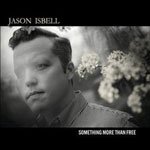
Reviewing this album gives me a case of the icks, the eews. I don’t believe I need to know anything about an artist’s personal life—what they’ve done, what kind of person they are—and those kinds of reviews tend to anger me. The only question that really matters is, is the music any good?
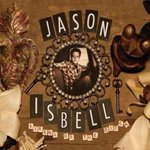
The latest Jason Isbell album can be listened to for what it is, which is immersive, beautiful acoustic singer-songwriter magnificence. On that level it is a top 10 album candidate for 2025. Isbell took an old Martin guitar into a studio for four days and recorded this entire album with nothing but him, his guitar playing, his feel for melody and turns of phrase that are masterful. Every word of every lyric comes across crystal clear, hiding nothing.
My first time listening to Foxes in the Snow, I was grateful. I’ve never been a big fan of Isbell’s band The 400 Unit, nor am I an acolyte of his Drive-By Truckers phase. “Elephant” was always my Isbell standard, and on first listen to the new release I said to myself, “Jeez, he’s finally surpassed it.”
Then, I relistened… perhaps too many times.
The new release is a song novel (short story) about his divorce with Amanda Shires. Listening casually the first time around, I didn’t get that. It is also a cycle that (likely from his perspective) is a confrontation with his recovery from addiction, and his struggles both pre- and post-addiction with love and commitment. I want to give him the benefit of the doubt, because recovery and how that plays into loving relations, is dang hard. Really hard.
That said, Foxes In The Snow is a one-sided story of navigating the conjunction of sobriety and love, and I don’t think he comes out on the best end of that story. (His story.) And weirdly, it matters to me, because it makes me worried about his ongoing recovery and angers me in terms of what he appears to be asking others in his life to forgive him about.
The first two songs, “Bury Me” and “Ride to Robert’s” are pre-Shires, or during meeting her. “Bury Me” starts as an a capella hymn, then transitions into straightforward country, letting us know that Mr. Isbell is setting the stage that the album is both gospel and roots-based, for him. It’s a beautiful song, with this wonderful lyrical quatrain:
I don’t say things that I don’t mean
And you’re the best thing I’ve ever seen
You can have my money if you spend your own
Well, I’m still running but I’m not alone
That quatrain shifts and morphs through two variations. The song represents a bottom for Mr. Isbell; he starts the album at his bottom, after getting sober, which may seem like an oxymoron.
“Ride to Robert’s” features just gorgeous, beautiful guitar work. Mr. Isbell was originally brought into Drive-By Truckers for his guitar playing. As an acoustic guitar player myself, the intricacy of his playing astounds. Lyrically, it seems obliquely about falling in love, after sobriety.
The next two songs are the core of this album, and they are devastating. “Eileen” is a big jump-cut to the divorce. We’re right in the midst of it when Mr. Isbell has another primal quatrain:
Eileen, you should’ve seen this coming sooner
Do I mean to be alone for all my days?
Eileen, you thought the truth was just a rumor
But that’s your way
He’s telling Eileen that it’s her fault she couldn’t envision what was coming, and that his recovery from addiction means that he couldn’t / shouldn’t be held accountable for the fact that he’s fallen out of love. Somehow, this is Eileen’s problem.
“Gravelweed” may be the most central center of gravity of this album-story. Mr. Isbell is now beyond the initial emotional upheaval of a divorce with someone who has devoted years helping him through his process of growth, and delivers another telling quatrain:
I was a gravelweed and I needed you to raise me
I’m sorry the day came when I felt like I was raised
And now that I live to see my melodies betray me
I’m sorry the love songs all mean different things today
It’s honest, and I suppose Mr. Isbell can be complimented about his self-awareness. But there is not a whit of gratefulness in this, nor in “Eileen,” that I can see—it’s all about Mr. Isbell’s solipsistic journey.
The next song, “Don’t Be Tough” moves on. It is likely the only song from this album that I’ll keep listening to for years to come. It seems to be a song for the daughter of his marriage with Shires. It is kind, it is gentle, and it is sharp about preparing an offspring for vicissitudes and challenges, with the constant refrain “let love knock you on your ass.”
The remaining songs are the aftermath of the divorce. “Open And Close” opens with a beautiful guitar arpeggio for a few bars that made me think about “Flight Of The Butterfly”: we’re in new musical and emotional terrain. He’s moving on; he’s met someone new. He’s happy again:
And there’s tea on the table
A dog in my lap
And I might be capable of taking a nap
In this New York apartment
Peace in the eye of the storm
It’s so warm
In “Foxes In The Snow”, he’s back in love. My guess is that at some point in the future a few of us may even put this song on our own wedding soundtracks. He loves everything about a new person he has met, he loves things about himself (“I love my mouth”) that are new to him. Good for him—but by now, he’s lost me. I keep wanting him to take some post-sobriety responsibility. (Side note: Mr. Isbell has said in recent interviews that the divorce was about “work-life balance.” Nothing on this album suggests that.)
“Crimson and Clay” is a deep recall of Isbell’s roots, suggesting that he now treasures his Alabama upbringing in ways he’s never realized before. But he continues to blame others (“the city”) for how he is right now, taking no responsibility:
Guess the city didn’t kill me after all
The thing that nearly took me out was loneliness and alcohol
And I just put it down and walked away
And crawled back to the crimson and the clay
Skipping ahead, we get to “True Believer.” After reflecting on his childhood, his divorce, and his song for his child, Mr. Isbell is back to ruminating about the divorce, and feeling very sorry for himself, and pretty sure that somebody else is responsible.
All your girlfriends say I broke your fucking heart, and I don’t like it
There’s a letter on the nightstand I don’t think I’ll ever read
Well, I finally found a match, and you kept daring me to strike it
And now I have to let it burn to let it be
He is very contented with this—he’s right, and everybody else is wrong. This bothers me, given how the entire album invites the audience into thinking about and judging his personal life. It’s still a beautiful song, as long as you project it into your own space.
“Wind Behind The Rain,” the last song on the album, is gorgeous, which is so frustrating. But please, enjoy, because as we know, music reviewers largely suck, and are always wrong.
Every song on this album is beautiful. If you love to hear Mr. Isbell stripped down to just a single acoustic guitar, and his lyrics—something some of us have been waiting on for a very long time—just love this album without all of this background and interpretation. Just don’t focus too much on the personal stuff that he’s covering here, because it doesn’t paint a pretty picture. My story, sticking to it.